Suno’s move toward licensed AI music does not erase the disputes that came before it. A court filing reported September 8 by Music Business Worldwide says the company acknowledged that audio data was obtained from YouTube for use as training data through the YT-DLP tool.
The admission came in Suno’s response to an amended complaint involving Universal Music Group and Sony Music Entertainment. Suno disputes the labels’ legal theories and challenges their standing on the stream-ripping claim, while also accusing the labels of anticompetitive conduct.
The timing is striking. One day later, Suno launched its new licensed v6 models in partnership with Warner Music Group, BMG and Believe. Together, the developments show two versions of the AI-music industry existing at the same time: unresolved litigation over how earlier systems were trained, and new commercial agreements designed to establish clearer permissions going forward.
The precedent creators are watching
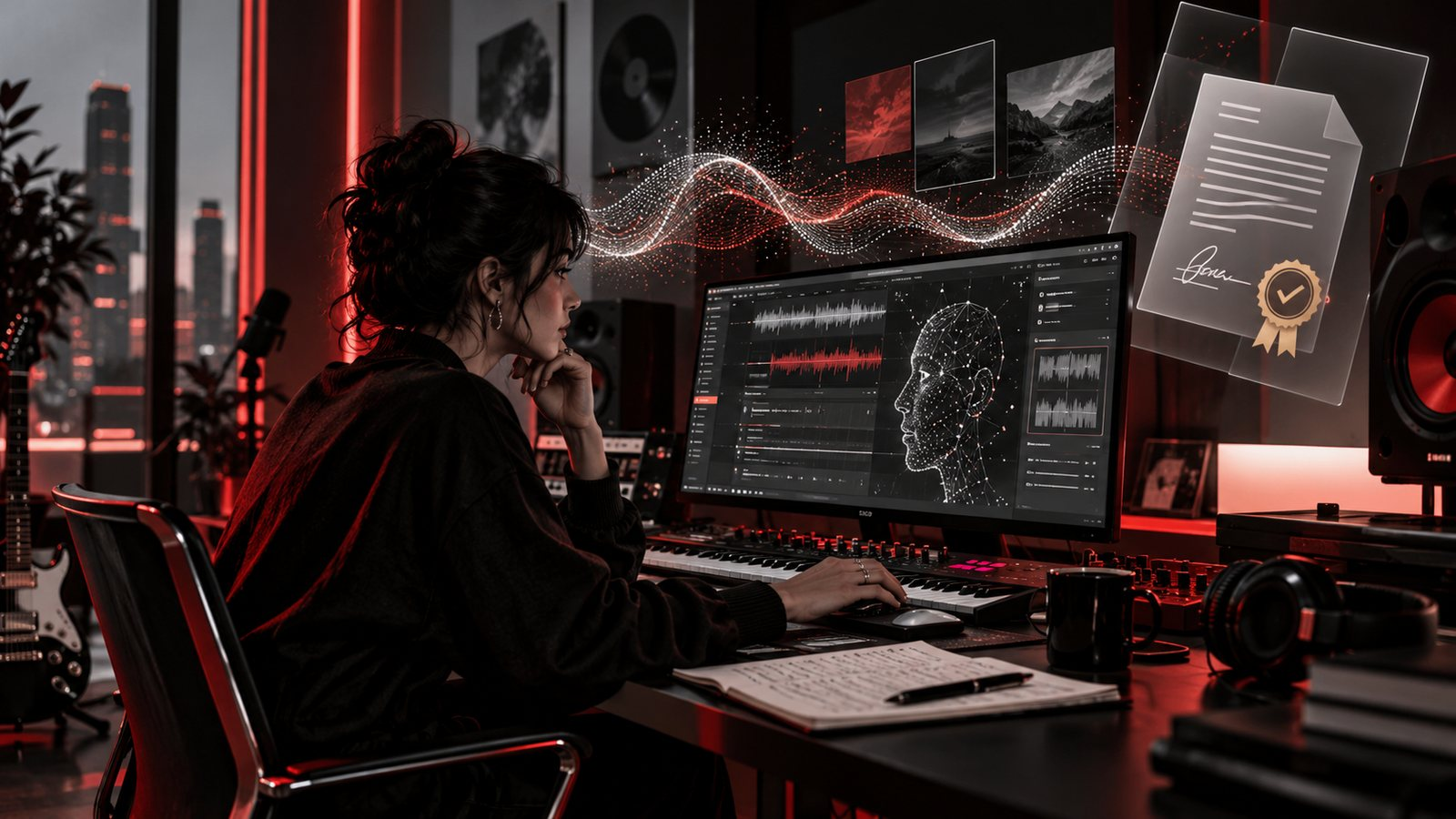
For artists and producers, the broader issue is provenance. A music-generation company can offer impressive tools, but creators increasingly want to know what went into the model, who authorized the use, and who is paid when the resulting product creates value.
Courts may eventually define some of those boundaries. The market is already trying to define others through licensing contracts, opt-in systems and technical safeguards.
Amplifier Take: Licensed models are a significant development, but the industry’s trust problem will not be solved by a new product launch alone. Transparency about training data and enforceable creator controls will be just as important as the sound quality of the models.