
A Hometown Legend Returns With a Vision for the Future
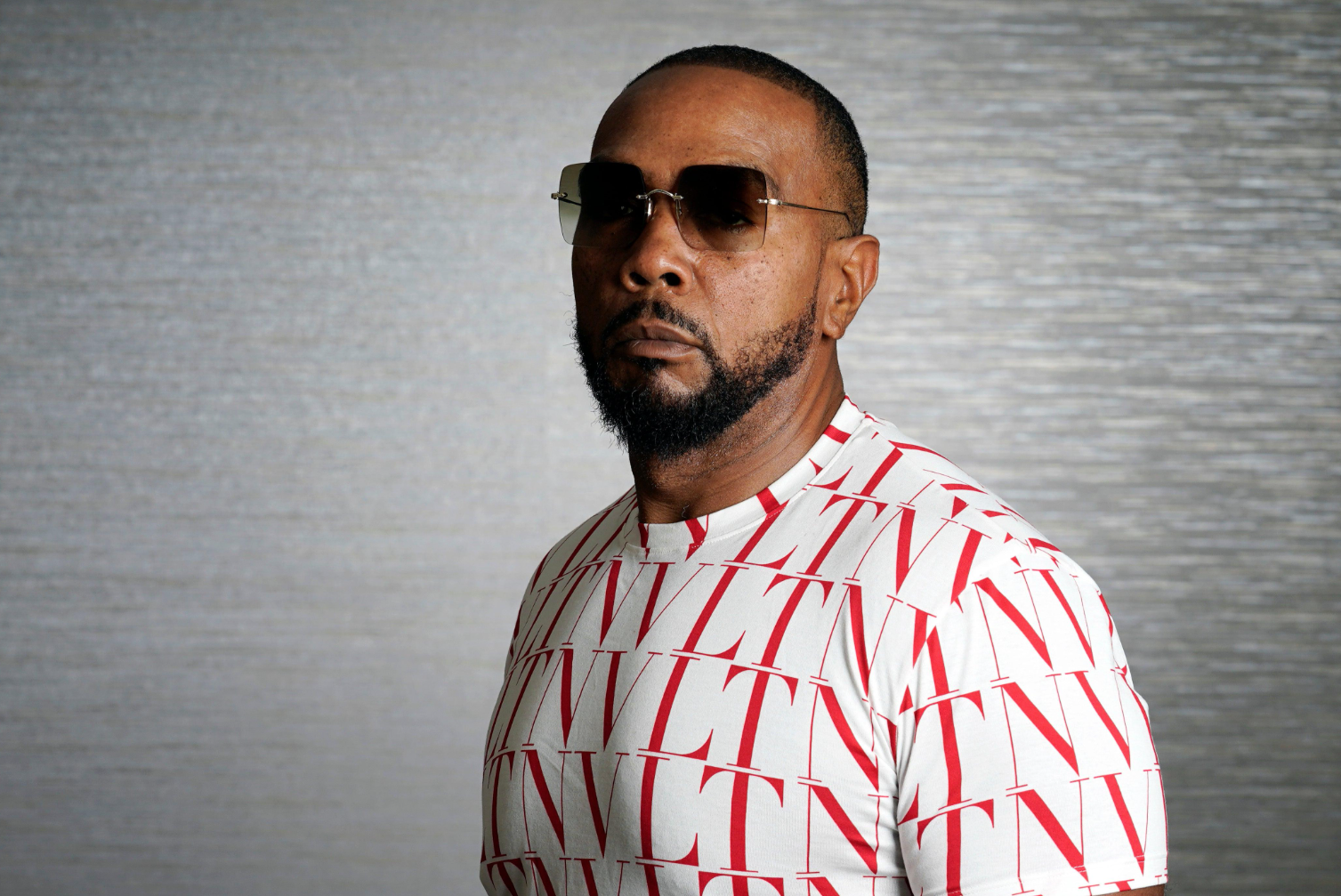
Virginia Beach has produced some of the most influential names in contemporary music, and few have had a greater impact on the sound of popular culture than Grammy-winning producer Timbaland.
On Saturday, October 24, 2026, the legendary producer returned to the spotlight in his hometown as CreatorVerse brought music, technology, entrepreneurship and emerging creative talent together at Batten University in Virginia Beach.
The Timbaland Way CreatorVerse Tech & Talent Expo was presented as a community-centered experience where innovation and entertainment could intersect. The free event, which required advance registration, was scheduled from 8 a.m. until 5 p.m. and featured technology demonstrations, gaming experiences, local businesses, emerging performers and opportunities for creative networking.
The broader CreatorVerse programming also included discussions about the future of music and artificial intelligence, along with separate entertainment activities.
For a region responsible for helping shape the careers of Timbaland, Missy Elliott, Pharrell Williams and numerous other influential music professionals, the concept was particularly appealing.
Hampton Roads has long demonstrated its ability to produce world-class creative talent. An event connecting that legacy to emerging technology represents an opportunity to inspire the next generation of musicians, producers and entrepreneurs.
But an ambitious concept does not automatically translate into an engaging event.
Amplifier Music Magazine staff attended CreatorVerse and observed firsthand a gathering that, despite its promising mission and celebrated host, generated less excitement than anticipated.
Timbaland and Hannon Lane Discuss AI's Growing Role in Music
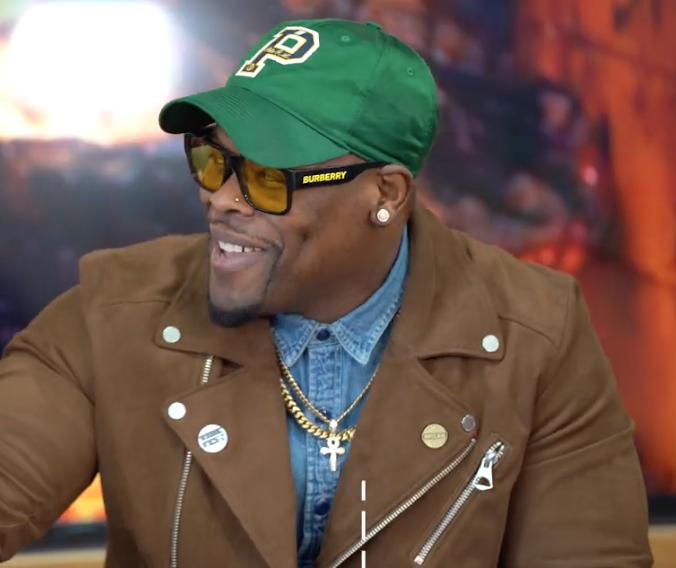
Among the event's more notable attractions was a discussion involving Timbaland and fellow producer Hannon Lane about artificial intelligence and the future of music production.
For music professionals, the subject is increasingly impossible to ignore.
Artificial intelligence has moved beyond experimental novelty and into practical applications involving songwriting, arrangement, sound design, vocal processing, mastering and content creation.
What once required expensive studio equipment and specialized technical knowledge can now, in some circumstances, be accomplished with comparatively inexpensive software and a computer.
The question is no longer whether artificial intelligence will influence music production. It already has.
The more important question is how extensively it should influence the creative process and what that influence means for the people who make music.
During the discussion attended by Amplifier, Timbaland appeared considerably more enthusiastic about the possibilities of artificial intelligence than Hannon Lane.
Timbaland's perspective reflected a willingness to embrace emerging technology as another instrument in the producer's creative arsenal.
Lane, by comparison, appeared more reserved about the degree to which artificial intelligence should be incorporated into music creation.
However, neither producer presented himself as entirely removed from the technology. According to Amplifier's observations, both acknowledged using AI in some capacity.
That distinction is significant.
The conversation was not simply between a producer who supports artificial intelligence and another who rejects it. Instead, it illustrated different levels of enthusiasm among experienced music professionals who recognize that the technology is becoming part of the industry's workflow.
"Back in the day the sky was the limit now its just the view"~Timbaland
"It allows people who arent musically inclined to be musically inclined even though they aren't"~Hannon Lane
Those remarks will help provide a more complete understanding of the producers' positions once Amplifier completes its review of the recorded discussion.
An Important Conversation, but Where Was the Revelation?
For anyone unfamiliar with artificial intelligence in music, the discussion offered an introduction to a rapidly developing technology.
For producers and industry observers who have already been following the subject, however, much of the conversation covered familiar territory.
AI can accelerate production. It can help generate ideas. It can assist with creative experimentation. It is changing the relationship between musicians and technology.
These are important observations, but they are hardly new.
What Amplifier hoped to hear was a more revealing discussion about how two accomplished producers are personally navigating the changes taking place in their profession.
How does a producer distinguish between an original composition and a machine-generated imitation?
At what point does AI-assisted production become AI-created music?
What happens to session musicians, background vocalists, engineers and independent producers when increasingly sophisticated software can perform portions of their work?
And perhaps most importantly, how should artists be compensated when their recordings, voices or creative styles are used to develop artificial intelligence systems?
These questions are especially relevant to established producers whose careers were built on musical originality.
Timbaland's reputation rests on his ability to recognize rhythmic possibilities that other producers overlooked. His innovative arrangements, unconventional percussion and distinctive sonic textures helped transform popular music.
Hannon Lane likewise represents a generation of producers whose creative identities developed through musical experience, technical skill and collaboration.
Hearing their perspectives is valuable precisely because both understand the traditional creative process.
But an audience assembled to hear from such accomplished professionals might reasonably expect a conversation that ventures beyond the widely circulated talking points surrounding AI.
The discussion presented an opportunity to explore the tension between technological convenience and artistic identity in greater depth.
From Amplifier's perspective, that opportunity was only partially realized.
A Free Event That Deserved a Larger Audience
One of the more surprising aspects of CreatorVerse was the relatively modest attendance observed by Amplifier staff.
Given Timbaland's international recognition, his connection to Virginia Beach and the fact that much of the event was free to attend, a larger audience seemed like a reasonable expectation.
The gathering did not appear to reflect the level of public interest that might ordinarily be associated with a hometown appearance by a producer of Timbaland's stature.
That observation should not be confused with an official attendance figure. Amplifier has not obtained verified attendance totals, and our observations do not represent every activity or venue throughout the weekend.
Nevertheless, the turnout during the portions we attended was noticeably lighter than anticipated.
That raises questions worth considering.
Was the event promoted effectively enough to reach the audiences most likely to attend?
Did potential visitors clearly understand what CreatorVerse offered?
Was the programming sufficiently compelling to attract music fans as well as technology enthusiasts?
Or did the combination of educational programming, technology demonstrations and entertainment fail to communicate a strong central attraction?
These are not necessarily criticisms of the organizers' intentions.
Creating a successful event around technology and the arts is challenging. The intended audience can include students, parents, musicians, entrepreneurs, educators, developers and entertainment professionals, each with different expectations.
An event that attempts to serve all of them must find a way to make its programming accessible and exciting without losing its educational value.
CreatorVerse clearly had an ambitious mission.
The challenge was translating that mission into an experience that consistently captured the attention of its audience.
The Difference Between Innovation and Entertainment
There is a tendency within the technology industry to assume that innovation is inherently exciting.
But for the average attendee, a demonstration of emerging technology must do more than explain what software can accomplish.
It must show why that accomplishment matters.
Music is particularly well suited to this kind of demonstration.
Imagine a live production session in which Timbaland and Hannon Lane each begin with the same musical idea.
One could develop the composition through a traditional production workflow, while the other incorporates artificial intelligence.
The audience could observe the decisions, compare the results and participate in a discussion about the creative differences.
Such an experience would turn a theoretical debate into something tangible.
It would also provide a more meaningful opportunity to examine the relationship between human creativity and machine-assisted production.
That is the type of programming that could distinguish a future CreatorVerse from the growing number of conferences and presentations devoted to artificial intelligence.
The technology itself is not the attraction.
What talented people accomplish with it is what makes the subject interesting.
Virginia Beach Has the Talent to Build Something Bigger
Despite Amplifier's reservations about attendance and the depth of the discussion, CreatorVerse represents an initiative with genuine potential.
Virginia Beach and the surrounding Hampton Roads communities possess an extraordinary musical heritage.
The region's influence extends across hip-hop, R&B, pop, gospel and contemporary music production.
That history provides a strong foundation for an event that brings established industry professionals together with emerging creators.
The involvement of educational institutions and community organizations adds another dimension.
For young people interested in careers involving recording technology, digital media, software development or entertainment entrepreneurship, access to working professionals can be invaluable.
Even a modestly attended event can make a meaningful difference for an individual participant.
A student who discovers a new career path, an aspiring musician who makes a useful connection or a young entrepreneur who learns about an unfamiliar technology may leave with something valuable.
Those outcomes should not be dismissed simply because an event fails to attract an enormous crowd.
At the same time, an event associated with a globally recognized producer should aspire to deliver an experience that matches the expectations created by that association.
The opportunity exists to build CreatorVerse into a signature regional gathering where music, technology and education intersect.
Doing so will require more than celebrity participation.
It will require compelling programming, effective community outreach, engaging demonstrations and a clear reason for people to return year after year.
The Future of Music Still Depends on People
Artificial intelligence will continue to influence how music is written, recorded, produced, distributed and marketed.
That transformation is unlikely to reverse.
But the future of music should not be defined exclusively by the capabilities of software.
Technology can assist with composition, but it cannot independently establish the cultural significance of a song.
It can reproduce musical patterns, but that is not the same as living the experiences that inspire artists to create.
It can accelerate production, but speed alone does not guarantee emotional connection.
The strongest creative work has always involved more than technical execution.
It reflects personality, judgment, experimentation, collaboration and the willingness to make decisions that challenge established conventions.
Timbaland's own career is evidence of that principle.
His contributions to modern music were not revolutionary because he merely had access to sophisticated equipment. They were revolutionary because he used available tools in ways that sounded different from what audiences had heard before.
That distinction remains relevant as producers begin incorporating artificial intelligence into their workflows.
The next great musical innovation may involve AI, but the technology's creative value will ultimately depend on the imagination of the people using it.
Amplifier's Final Assessment
CreatorVerse brought an important conversation to Virginia Beach and reinforced the city's connection to the continuing evolution of music and technology.
Its mission deserves recognition.
However, the event also demonstrated that an impressive concept, a recognizable name and free admission do not necessarily guarantee strong attendance or an engaging audience experience.
The discussion between Timbaland and Hannon Lane provided an opportunity to hear two experienced producers address the growing role of artificial intelligence in music.
Their differing levels of enthusiasm offered an interesting contrast, but the conversation largely revisited ideas already familiar to those following developments in AI-assisted production.
For Amplifier, the event was more promising in concept than compelling in execution.
That does not make CreatorVerse a failure.
It makes the next step especially important.
With stronger audience engagement, more revealing conversations and creative demonstrations that place the technology directly into the hands of artists, CreatorVerse could become a meaningful annual destination for the music and technology communities.
Virginia Beach certainly has the history, talent and creative resources to support such an undertaking.
The question is whether CreatorVerse can transform that potential into an experience audiences genuinely do not want to miss.
Amplifier's bottom line: The future of music may be powered by technology, but the success of events celebrating that future will still depend on something decidedly human: giving people a compelling reason to show up.
Editor's note: Amplifier Music Magazine attended the event. Observations concerning attendance and the panel discussion reflect the staff's firsthand impressions. Official attendance totals were not available.