

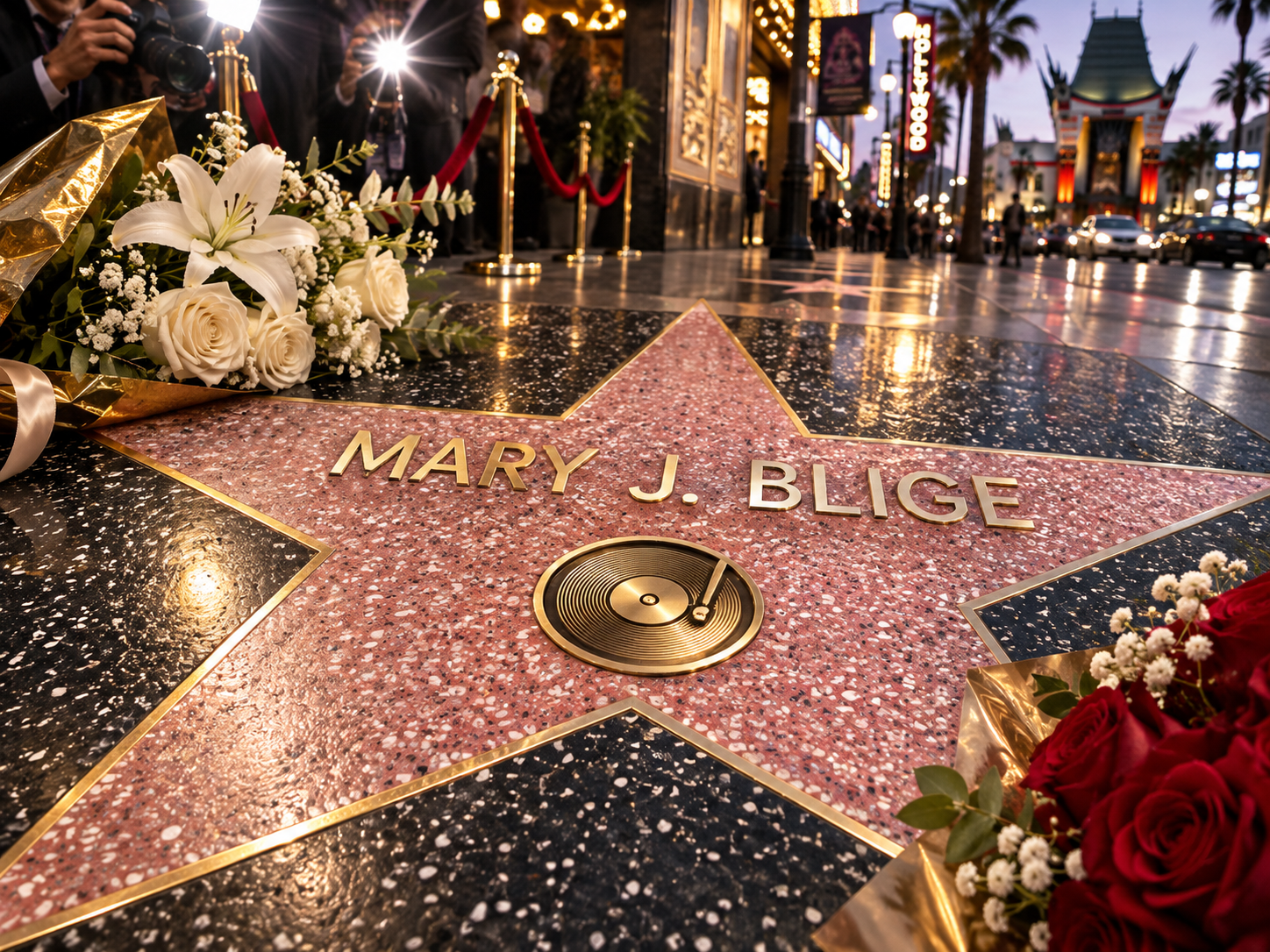
The Queen of Hip-Hop Soul has entered a major catalog partnership with Primary Wave Music, opening new possibilities for her recordings, publishing, branding, and licensing. The financial terms remain private, but the deal raises a bigger question: Who should control the music that made an artist legendary?
By Amplifier Music Magazine | Music Industry News
Mary J. Blige has spent more than three decades turning heartbreak, triumph, struggle, and survival into some of the most recognizable recordings in contemporary R&B.
Now she's making another major business move.
On October 26, 2026, Primary Wave Music announced a new partnership with the nine-time Grammy Award winner covering compositions and recordings from her extensive music catalog.
And we're not talking about a handful of forgotten album tracks.
We're talking about classics including "Family Affair," "My Life," "Be Without You," "Mary Jane (All Night Long)," "Be Happy," "You Bring Me Joy," and "I Can Love You."
Songs that helped define an entire generation of R&B and hip-hop soul.
But there's a very important distinction in this announcement.
As of this article, it has not publicly confirmed that Mary J. Blige sold her catalog or transferred ownership of any specific percentage of her rights. We're turning this up first.
Financial details were not disclosed.
That hasn't stopped speculation about what the deal could be worth.
But before anybody starts throwing around multimillion-dollar figures, let's examine what actually happened.
A Catalog Worth More Than Nostalgia
Mary J. Blige isn't simply an artist with a collection of old hits.
She's a cultural institution.
Since releasing What's the 411? in 1992, Blige has built a career encompassing 15 studio albums, two live albums, and 83 singles.
According to Primary Wave, her worldwide record sales exceed 50 million.
Her accomplishments include nine Grammy Awards, an induction into the Rock & Roll Hall of Fame in 2024, and numerous other honors.
But awards and record sales tell only part of the story.
Her music continues to attract listeners because the songs themselves have become part of the cultural landscape.
Think about "Family Affair."
Released in 2001, the record became her first Billboard Hot 100 number-one single and spent six weeks at the top of the chart.
Twenty-five years later, it remains one of her signature recordings.
Then there's My Life, her deeply personal 1994 album, which was selected for the Library of Congress's National Recording Registry in 2025.
That recognition underscores something important.
The commercial life of a recording doesn't necessarily end when its original promotional campaign concludes.
Sometimes its cultural and financial significance increases over time.
And that's exactly what companies like Primary Wave are interested in.
Who Is Primary Wave, and Why Does It Want Mary's Music?
Primary Wave is one of the music industry's most prominent companies specializing in established music catalogs.
Founded in 2006 by Larry Mestel, the company has built a business around acquiring, managing, marketing, and commercially developing music rights.
Its portfolio includes interests connected to legendary performers and songwriters such as Prince, Bob Marley, Whitney Houston, James Brown, Luther Vandross, and Ray Charles.
The company's strategy goes beyond simply collecting royalty checks.
Primary Wave seeks opportunities to introduce established recordings to new listeners through films, television, advertising, digital campaigns, and other entertainment properties.
Consider the possibilities.
A Mary J. Blige classic could become the emotional centerpiece of a major motion picture.
A streaming series could introduce "My Life" to a younger audience.
A brand campaign could license one of her recordings.
A documentary could generate renewed interest in her earlier albums.
Each opportunity may produce licensing income while simultaneously increasing streaming activity and catalog visibility.
But whether any specific project moves forward depends on the rights involved, contractual approvals, and the economics of the proposed use.
Music Publishing Versus Master Recordings
Here's where the business gets complicated.
When people hear that an artist has made a catalog deal, they sometimes assume that the artist has sold every recording and every song.
That's not necessarily true.
There are two fundamental categories of rights involved in commercially released music.
Publishing rights concern the underlying musical composition, including the songwriting and lyrics.
Master recording rights concern the particular recorded performance of that composition.
Those rights may belong to different individuals or businesses.
For example, a songwriter can retain a financial interest in a composition even when a record company controls the associated master recording.
And several writers may share ownership of a single composition.
Blige's recording history includes releases through MCA and Geffen, whose catalogs are now part of Universal Music Group.
The involvement of Primary Wave doesn't automatically mean Universal has relinquished its existing interests.
Nor does it establish that Blige transferred all of her publishing rights.
Primary Wave's announcement specifically references compositions and recordings, but it does not explain precisely which rights are being licensed, administered, or transferred.
That distinction matters.
Because in the modern music business, control of intellectual property can be more valuable than the initial sale of the record.
The Real Money May Be in Synchronization
One of the most interesting parts of the agreement involves synchronization licensing, commonly called sync.
Sync licensing generally involves permission to use music alongside visual media.
Television programs, movies, advertisements, video games, and streaming productions all potentially require music licenses.
A successful placement can generate licensing revenue and introduce an older recording to an entirely new audience.
Primary Wave has identified synchronization opportunities as one of the potential areas of collaboration with Blige and her team.
That's significant.
Blige's catalog contains songs associated with love, hardship, independence, perseverance, and celebration.
Those themes can translate effectively into visual storytelling.
And a song that once dominated radio can find a second commercial life through a memorable film or television placement.
However, sync licensing is not guaranteed income. Fees vary widely, and uses of existing recordings generally require the appropriate permissions from both composition and master-rights holders.
Is This the New Retirement Plan for Music Legends?
The recording industry has experienced an extraordinary increase in investment interest surrounding established music catalogs.
Investors have recognized that successful songs can produce revenue for decades through streaming, radio, licensing, and other uses.
That financial potential has attracted publishers, investment funds, and specialized music companies.
But here's the part that deserves closer attention.
Artists have spent years fighting for fair compensation, royalty accounting, and control over their creative work.
Now, after decades of building successful careers, some performers are choosing to monetize or partner around their catalogs.
Others retain ownership while working with companies that have greater resources to exploit those recordings commercially.
Neither approach is automatically right or wrong.
What matters is the contract.
Does the artist receive an immediate payment?
Are future royalties shared?
Does the agreement include approval rights over licensing?
Can the artist prevent a recording from being used in an advertisement or political campaign they oppose?
How long does the agreement last?
Those are the questions that determine whether a catalog arrangement is a sound long-term business decision.
And the answers are not available in the public announcement of Blige's partnership.
Mary Isn't Slowing Down
What's particularly interesting about this deal is that Mary J. Blige isn't stepping away from music.
She's still performing.
Her My Life, My Story Las Vegas residency at Dolby Live at Park MGM began in May 2026 and has been extended into February 2027.
She's also continued releasing new music, including the 2026 single "Want Love."
That means the Primary Wave relationship isn't necessarily about closing the book on her career.
It could represent another way to expand the commercial reach of the music she's already created while continuing to pursue new projects.
And that is a very different proposition from simply collecting a check and disappearing from the industry.
The Amplifier Perspective: Your Music Is an Asset, Not Just an Art Form
Let's talk about something many independent artists don't consider until it's too late.
A song is more than a recording sitting on a streaming platform.
It is intellectual property.
And intellectual property can generate revenue long after the recording session ends.
But only if the artist understands what they own.
Far too many musicians focus exclusively on recording, performing, and promotion without giving sufficient attention to publishing agreements, master ownership, songwriter splits, and royalty administration.
They'll spend thousands of dollars producing a song and never properly document who owns what.
Then, years later, when a licensing opportunity appears, the ownership structure becomes a problem.
Mary J. Blige's partnership should serve as a reminder that the music business doesn't end when the record leaves the studio.
That's where another part of the business begins.
And it isn't just legendary artists who need to understand it.
Independent musicians, producers, songwriters, and smaller record-label operators should be paying attention.
Because the value of a successful music catalog isn't determined exclusively by how many streams it generates this month.
It's also influenced by how those rights can be developed over the next 10, 20, or 30 years.
The Bottom Line
Mary J. Blige has already secured her place in music history.
Her catalog has influenced generations of performers and helped define the sound of contemporary R&B.
Now she's working with a company whose business is built around maximizing the long-term value of iconic recordings.
The financial details of the Primary Wave agreement remain undisclosed.
And without knowing the actual contract, no one outside the parties can responsibly declare exactly how much she received, what ownership may have changed, or who controls every future licensing decision.
But the larger story is clear.
The modern recording industry is increasingly recognizing that great music is not simply a product with a short shelf life.
It is a financial asset capable of generating revenue for generations.
Mary J. Blige spent more than 30 years building a legendary catalog. Now the business is finding new ways to keep that catalog working.
And for independent artists watching from the sidelines, here's the million-dollar lesson:
Don't just make music that people want to hear today. Understand how to protect the music they'll still want to hear 30 years from now.
AMPLIFIER MUSIC MAGAZINE
Music. Technology. Culture. No Corporate Filter.