
This week's launch of licensed AI music models from Suno has reopened a basic question that is often lost in arguments about artificial intelligence: What exactly is the technology doing to the music?
Paul McCartney and the Beatles provide one of the clearest examples of why that distinction matters.
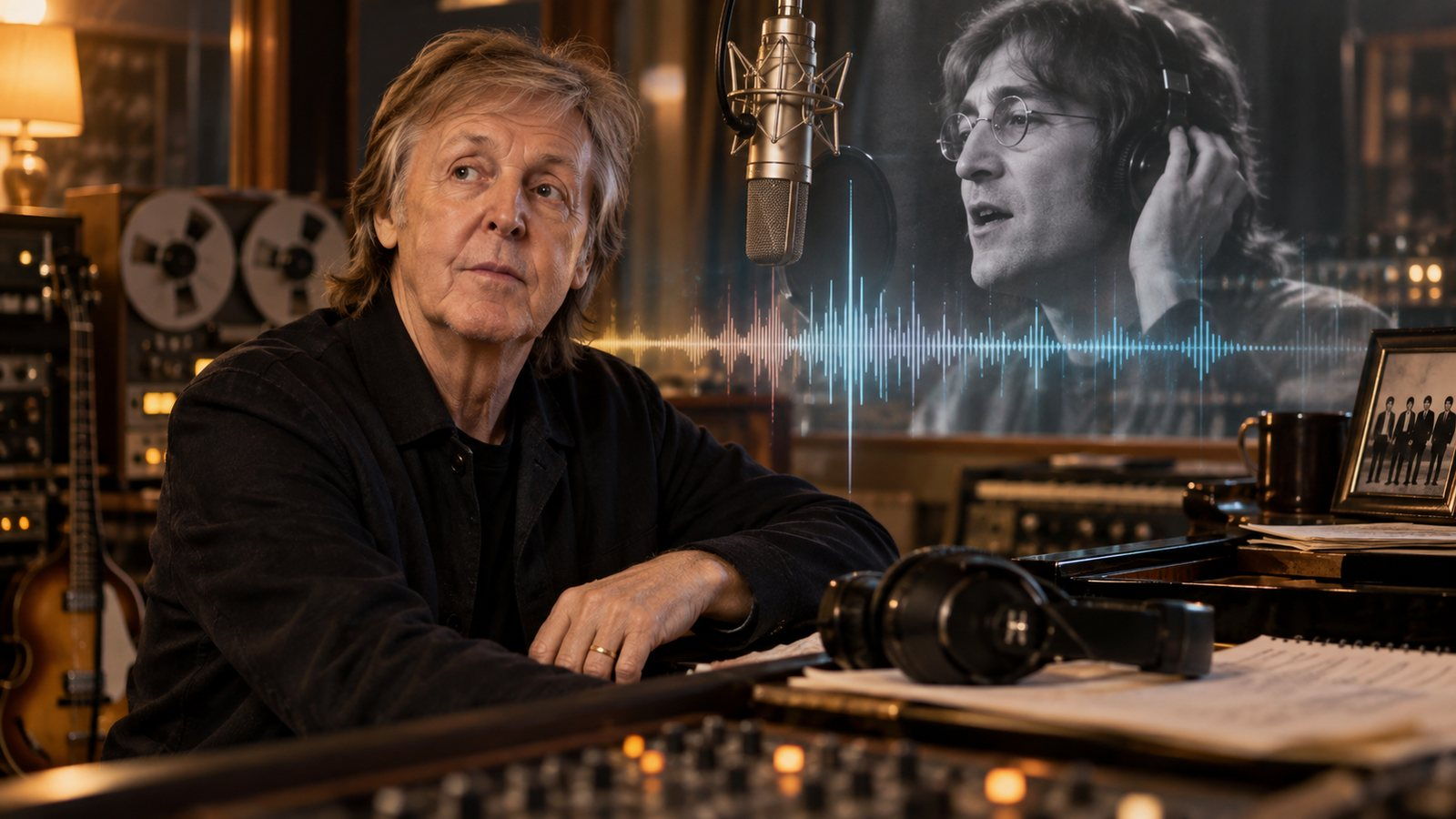
When “Now and Then” was completed, machine-learning technology was used to separate John Lennon's real vocal performance from the piano and other sound embedded in his old home demo. The Beatles' official account explains that Peter Jackson's team applied the same source-separation approach developed for Get Back so Lennon's original voice could be isolated with enough clarity to finish the recording.
The system did not invent a new Lennon vocal. Producer Giles Martin has repeatedly emphasized that the voice already existed on the cassette. The technology helped engineers extract it.
Restoration and generation are not the same thing
That makes “Now and Then” fundamentally different from a system that generates a new vocal performance designed to sound like a recognizable artist. One process recovers information from an existing human performance. The other synthesizes new material based on patterns learned by a model.
The distinction is increasingly important as companies such as Suno move into licensed generative models. Rights holders are negotiating when music can be used, artists are asking how they can control participation, and courts are considering what existing copyright law means for AI training.
McCartney's Beatles project demonstrated a version of machine learning that many musicians find easier to understand: use advanced computation as a restoration tool, preserve the human performance and make previously unusable material accessible.
Amplifier Take: “Now and Then” should remain part of every serious conversation about AI music because it proves that the technology does not have to replace authorship. Used carefully, it can reveal and preserve authorship that was already there.