
The fight over AI music has moved deeper into the distribution layer. Universal Music Group filed suit against DistroKid in federal court in Delaware, accusing the independent distribution platform of helping deliver thousands of allegedly unauthorized, altered or AI-generated recordings to digital services.
Reuters reported that UMG’s complaint points to recordings connected to major artists including The Beatles, Drake, Lady Gaga and Rihanna and alleges that some material was created or altered using generative-AI tools.
Why the distribution layer matters
Much of the AI-music debate has focused on model training: what music was used, whether permission was obtained and how artists should be compensated. The DistroKid dispute brings another question forward—who is responsible when questionable recordings are uploaded at scale and routed to Spotify, Apple Music and other platforms?
Digital distributors act as the bridge between independent creators and streaming services. That openness has lowered barriers for legitimate artists, but it also creates a potential pathway for impersonation, manipulated recordings and mass-uploaded content.
DistroKid has denied UMG’s allegations and criticized the decision to litigate rather than resolve the dispute through existing industry processes.
Amplifier Take: AI music’s next legal battles will not be limited to the companies that build generation tools. Distributors, streaming services and rights-management systems are becoming part of the accountability chain, because every generated track still needs a route to reach listeners and collect money.
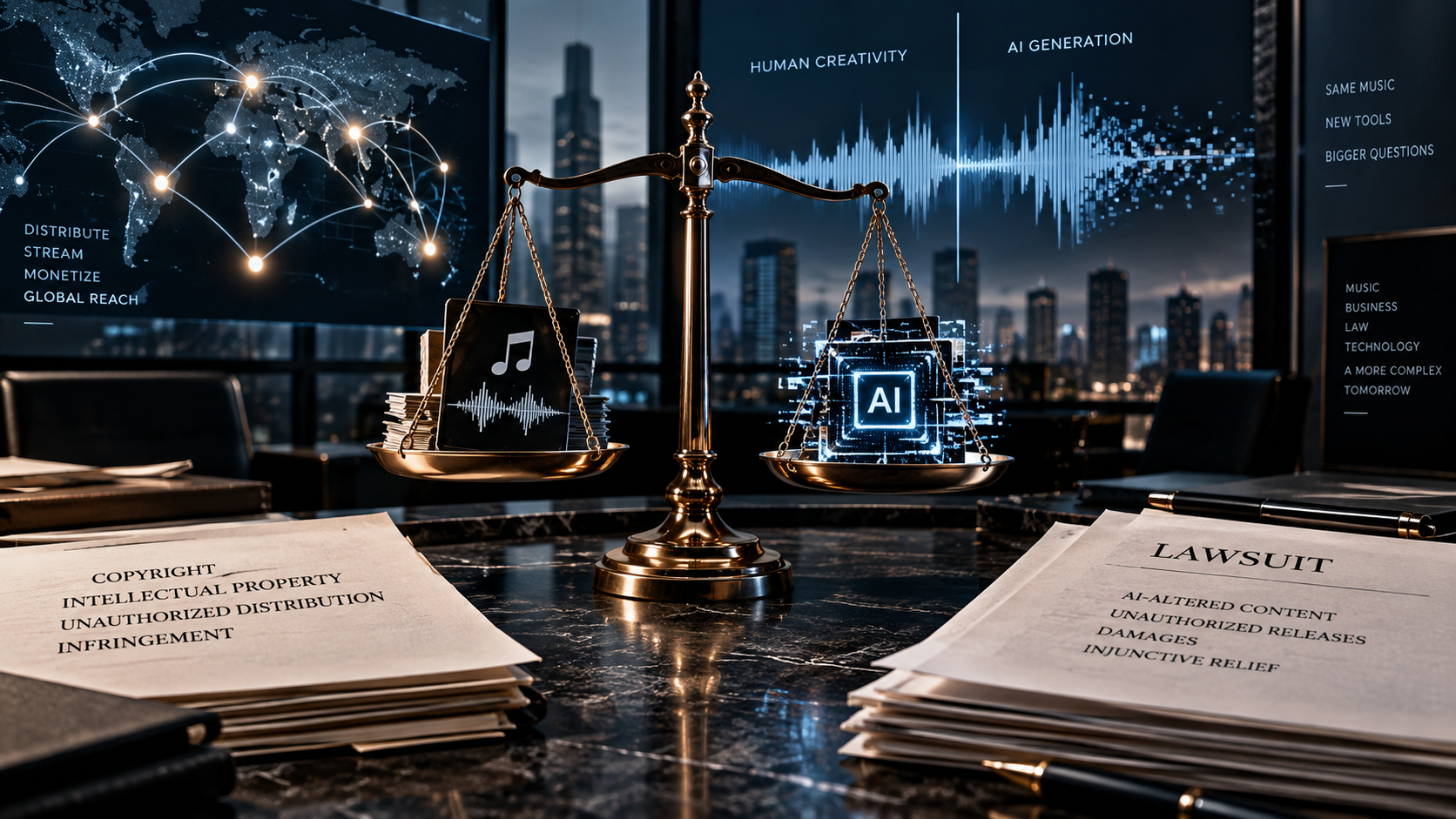
Featured-image note: Create an original Amplifier graphic combining distribution, waveform and AI imagery; avoid implying guilt before the case is resolved.